

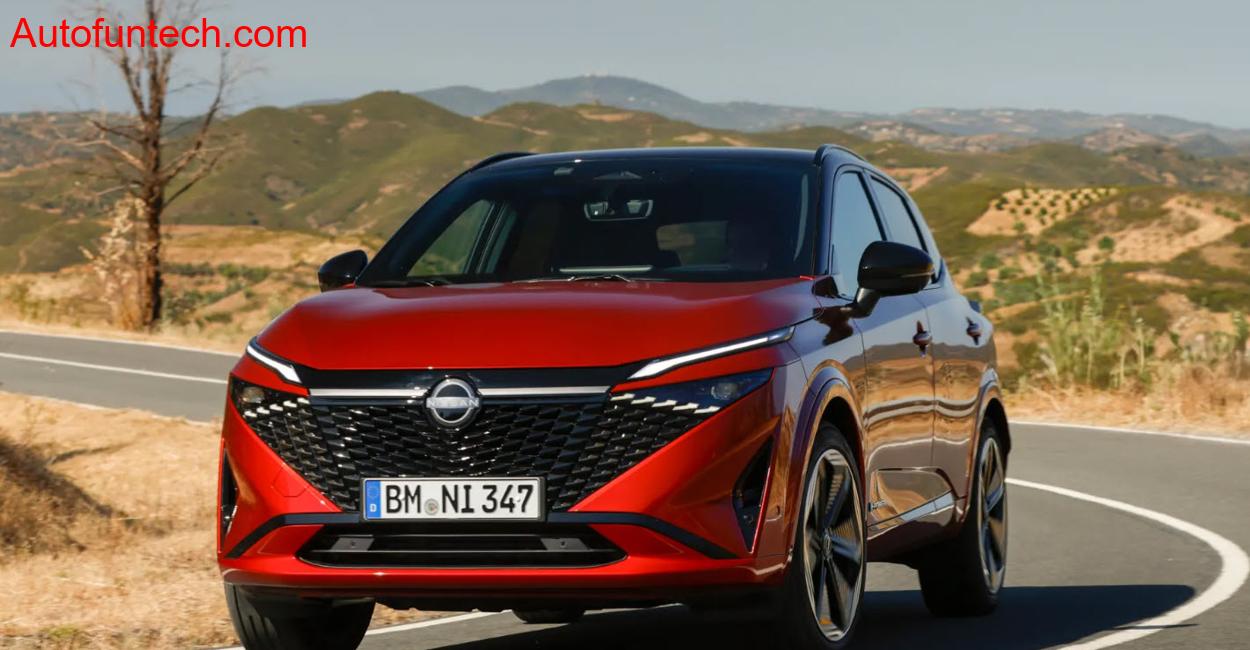
First Impressions: Familiar but Sharpened
The Qashqai’s 2024 facelift hasn’t overhauled its shape, it didn’t need to. But the new nose feels stronger, more assertive, especially when parked beside a Peugeot 3008 or a VW Tiguan. There’s a stealthy sharpness to it, particularly with the updated LED matrix lights and a grille that feels like it could belong to something more expensive.
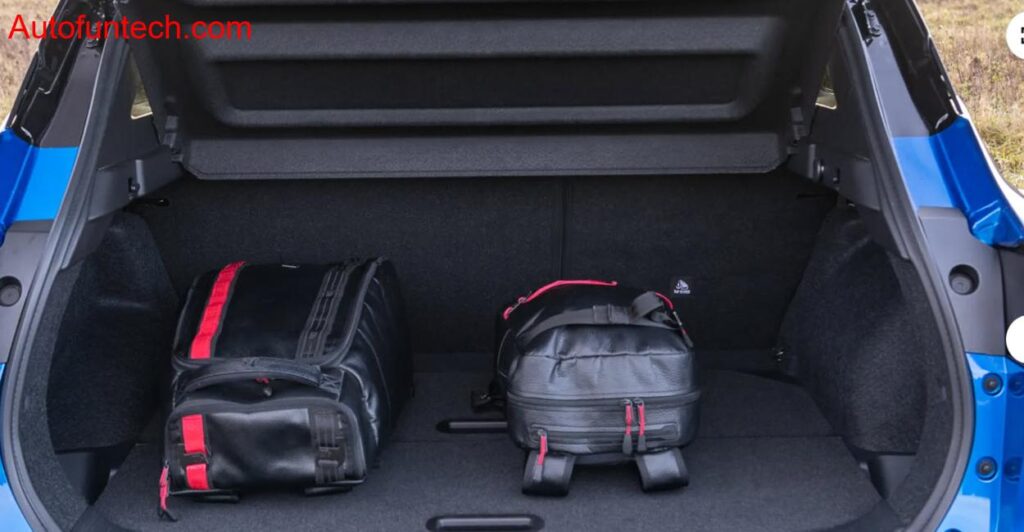
My test car was a deep graphite gray, catching the soft Baumberge sunrise just right as I loaded my bags and camera gear into the generous boot. The 436 to 504 liters of space felt just enough for a weekend’s worth of gear, and when I dropped the rear seats later, the flat loading floor was a blessing for my tripods and drone kit. Small details, but ones that matter when you’re on the road.
Climbing Into the Cockpit: Comfort Meets Common Sense
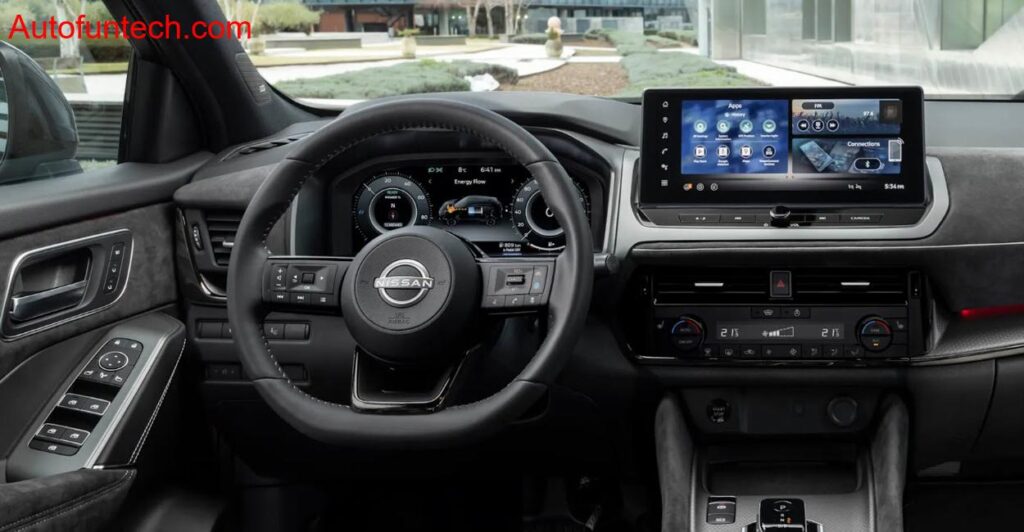
Inside, the Qashqai’s interior didn’t try to seduce me with flashy screens or overly ambitious UI gimmicks. Instead, it welcomed me with a balance of functionality and modern touches. The fully digital cluster was clean and informative, the head-up display was perfectly placed, and thank the driving gods, climate controls still had physical knobs.
It felt more like a cabin made for driving than for impressing your tech-savvy friends. Though for those who love their gadgets, there’s plenty: the infotainment system now seamlessly integrates Google Maps and Assistant, even Amazon Alexa if you fancy that. Saying “Hey Google, navigate to Münster” while rolling out of a misty valley in the Baumberge felt more natural than I expected.
On the Road: Where the Hybrid Truly Speaks
Here’s where things got fascinating.
This isn’t your regular hybrid where the petrol engine and electric motor swap roles constantly. The Qashqai e-Power runs solely on electric drive, yes, you heard that right. The wheels are turned only by the electric motor, while the 1.5L VC-Turbo petrol engine runs in the background to generate electricity. It’s like an EV with its own little power plant onboard.
The result? The instant torque and responsiveness of an electric car, but with the range and refill speed of a petrol one.
As I wound my way through the narrow forest lanes and undulating terrain around Billerbeck and Darfeld, the response off the line was smooth and immediate. It didn’t surge like a Tesla, but it didn’t need to. Instead, it glided confidently, the kind of composed push you want in a daily driver.
The road up to Baumberge’s observation point isn’t kind. It’s cracked, sometimes barely wide enough for one car, and it throws unexpected cambers at you like a local test. The Qashqai soaked it all up. The multi-link rear suspension, improved since the last generation, no longer felt jittery over bumps. And though I was riding on the 19-inch wheels, it wasn’t punishing.
At higher speeds on the A1 autobahn stretch near Coesfeld, I opened it up a bit. The artificial feel of the electric CVT drivetrain becomes more noticeable here. There’s a disconnect between engine sound and speed. It took me a few kilometers to stop waiting for gear changes and just let it be.
Overtakes from 80 to 120 km/h were done in under 7 seconds, and cruising at 130 km/h felt effortless. There’s a stability to the Qashqai that’s hard to describe unless you’ve driven it on Germany’s no-nonsense roads. It doesn’t float, doesn’t wag its tail, it just goes, silently and confidently.
Tech in the Real World: Smarts Without Fuss
I parked near Havixbeck for a mid-day break, and that’s when the Qashqai’s Around View Monitor came into its own. The new 3D camera setup doesn’t just give you a top-down view, it lets you spin the car around from multiple angles, including a see-through bonnet view to show your front wheels. Tight parking spots between two vans? No problem.
There’s adaptive cruise with predictive braking before curves, cross-traffic assist, and a very subtle lane centering system. None of these systems felt invasive. They worked with me, not against me, a rare thing in modern cars.
Oh, and shoutout to the traffic jam assistant during a slow crawl near Münster. It took over throttle and brakes like a seasoned chauffeur.
Living With It: The Hybrid Equation
Fuel economy? Over my two-day run through hills, towns, and highways, I averaged 6.3 liters per 100 km. That’s better than the official 7.0-7.4 L/100km figure in many tests. But here’s the kicker, this was with absolutely no attempt at hypermiling.
The 55-liter tank and decent real-world economy gave me a range of over 800 kilometers with ease. That’s the kind of peace of mind an EV still struggles to match outside urban hubs.
Technical Specifications:
| Specification | Detail |
| Powertrain | e-Power Hybrid (Series Hybrid) |
| Engine | 1.5L VC-Turbo Petrol Generator |
| Electric Motor Output | 190 hp (140 kW) |
| Engine Output | 154 hp (used only to generate power) |
| Torque (electric motor) | 330 Nm |
| Transmission | Single-speed (EV-like) |
| Drivetrain | Front-wheel drive |
| 0-100 km/h | ~7.9 seconds |
| Top Speed | 170 km/h |
| Fuel Consumption (avg) | 6.3 – 7.4 L/100 km (real world: 6.3) |
| Battery Capacity | 1.97 kWh (non-plug-in hybrid) |
| Boot Space | 436 – 504 L (up to 1447 L folded) |
| Length | 4.43 meters |
| Width | 1.84 meters |
| Height | 1.63 meters |
| Weight | Approx. 1600 kg |
Conclusion: Rock-Solid in Every Sense
There’s a reason the Nissan Qashqai remains a European favorite. It’s not flashy. It’s not trying to be revolutionary. But what it is, is damn competent.
The 2025 e-Power hybrid model is the perfect evolution for those who aren’t ready for full EVs but want to drive like they are. It brings the smoothness, the quiet, and the low-end torque of an electric car, without any of the charging anxiety.
Leave a Comment